bedhubElevate
Case studyCare platform, 2026
Overview
Small care homes run on paper binders and apps that never talk to each other. BedHub Elevate puts the whole home in one system. I built its front end across every module and wrote much of the API behind it.
- ClientBedHub, operations software for small residential care homes in Canada and the US
- My roleFront end across every module, plus API endpoints, migrations and tests
- Worked withTwo engineers at Vasdev Design
- StackReact 19, TypeScript, React Router, Bootstrap, Vercel functions, MySQL 8, Stream Chat
- 352My commits in three months
- 30+Modules, desktop and phone
- 248Database tables behind them
- 4Roles, from owner to family
01 / The nurse's morning
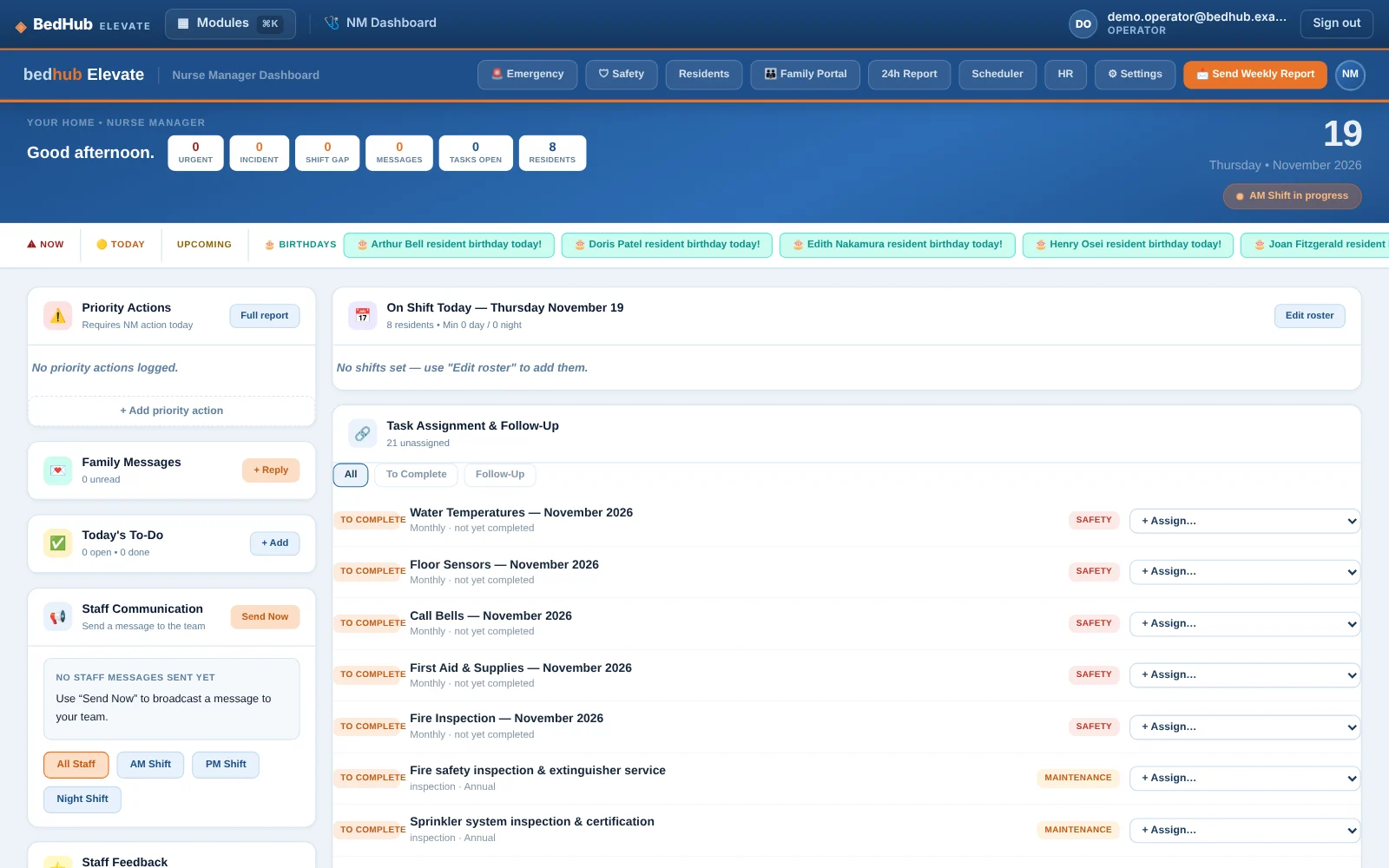
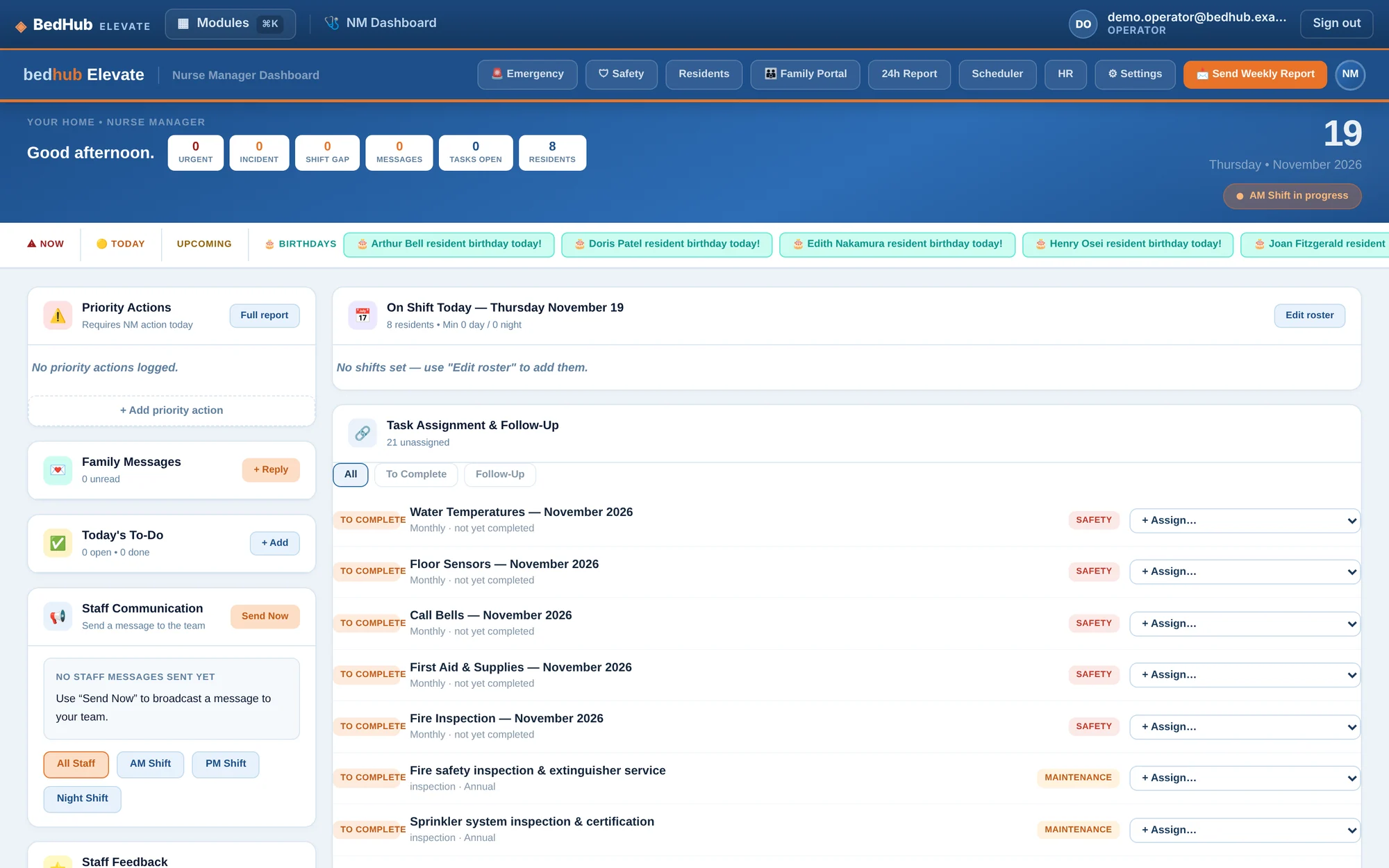
One screen answers what needs attention today: flagged residents, open tasks, safety checks and family messages.
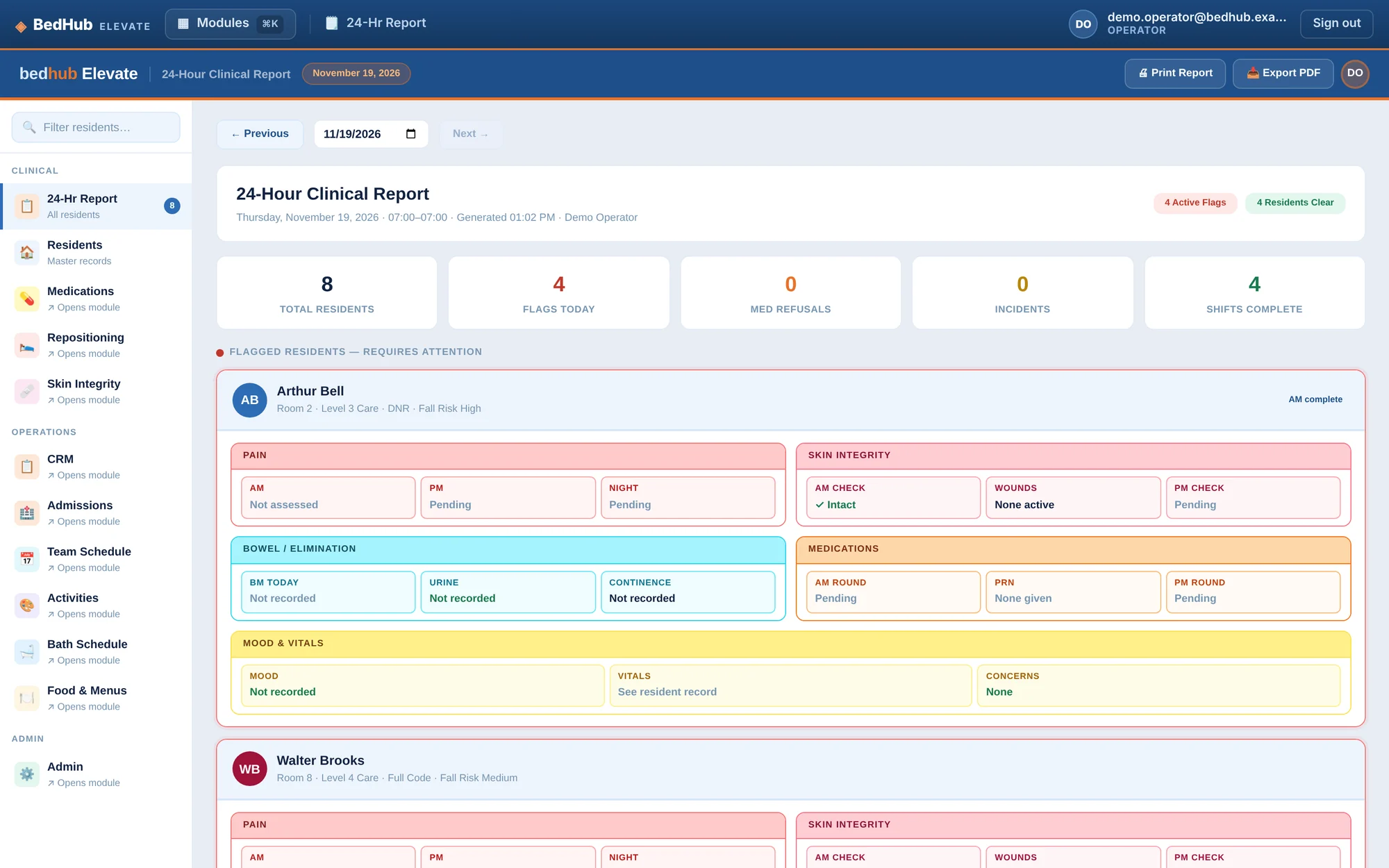
The 24-hour report rolls every shift into one page per resident.
02 / Care at the bedside
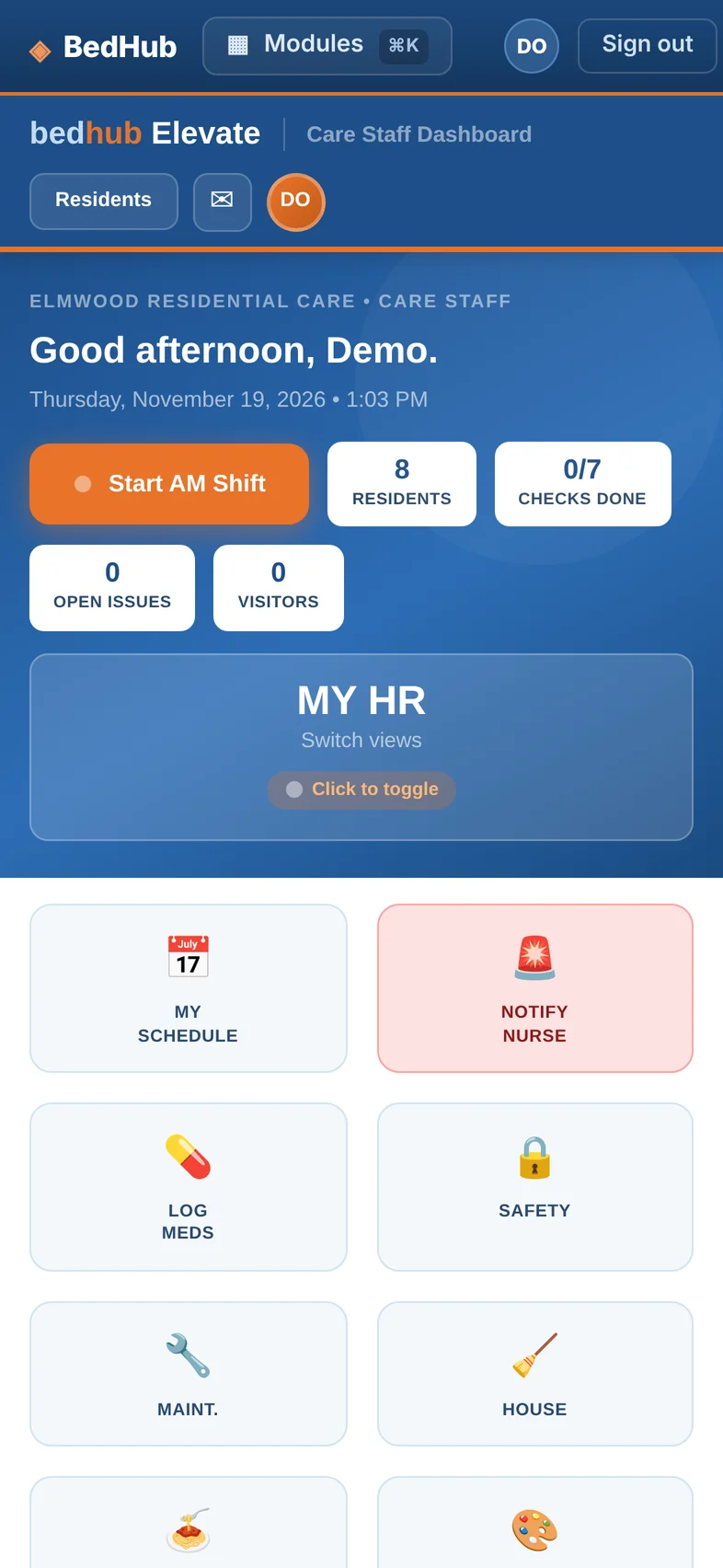
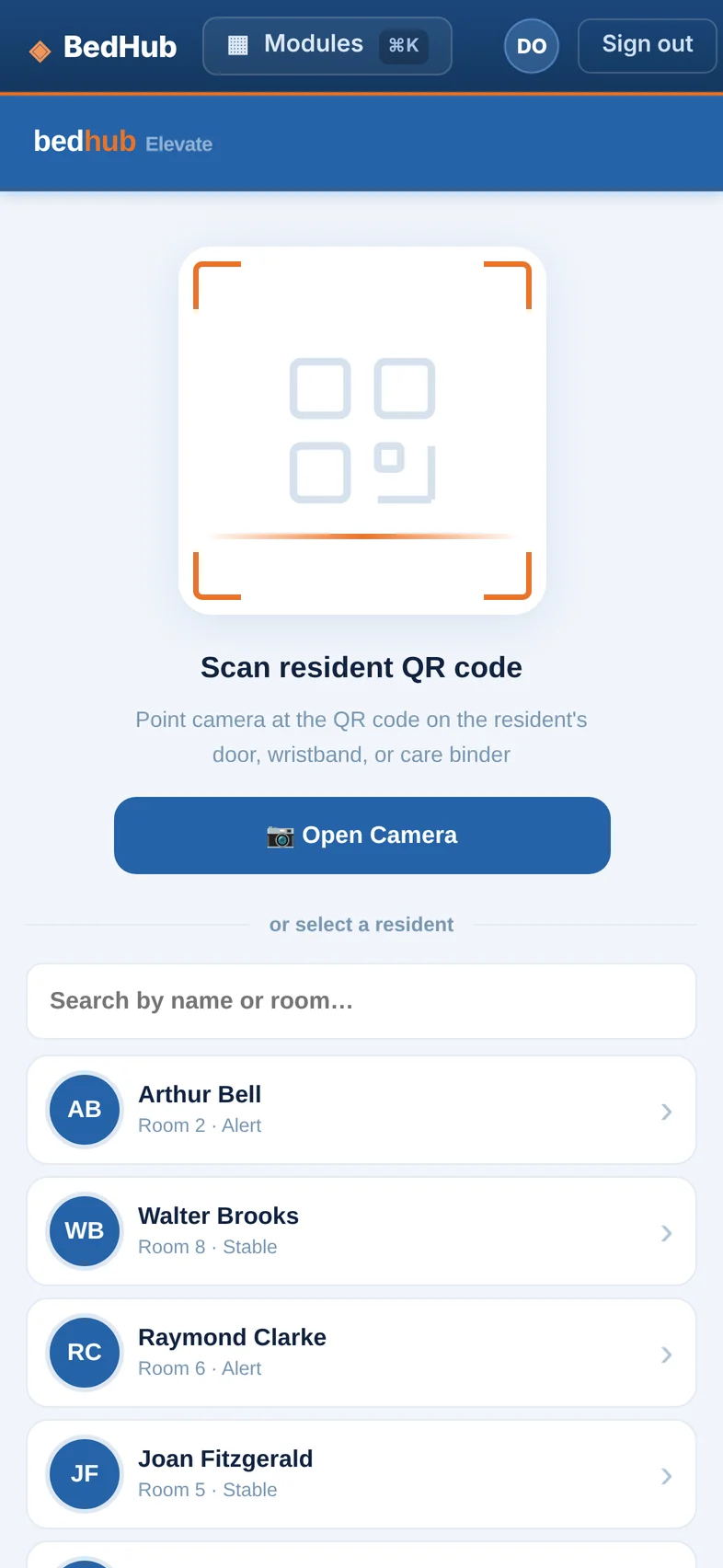
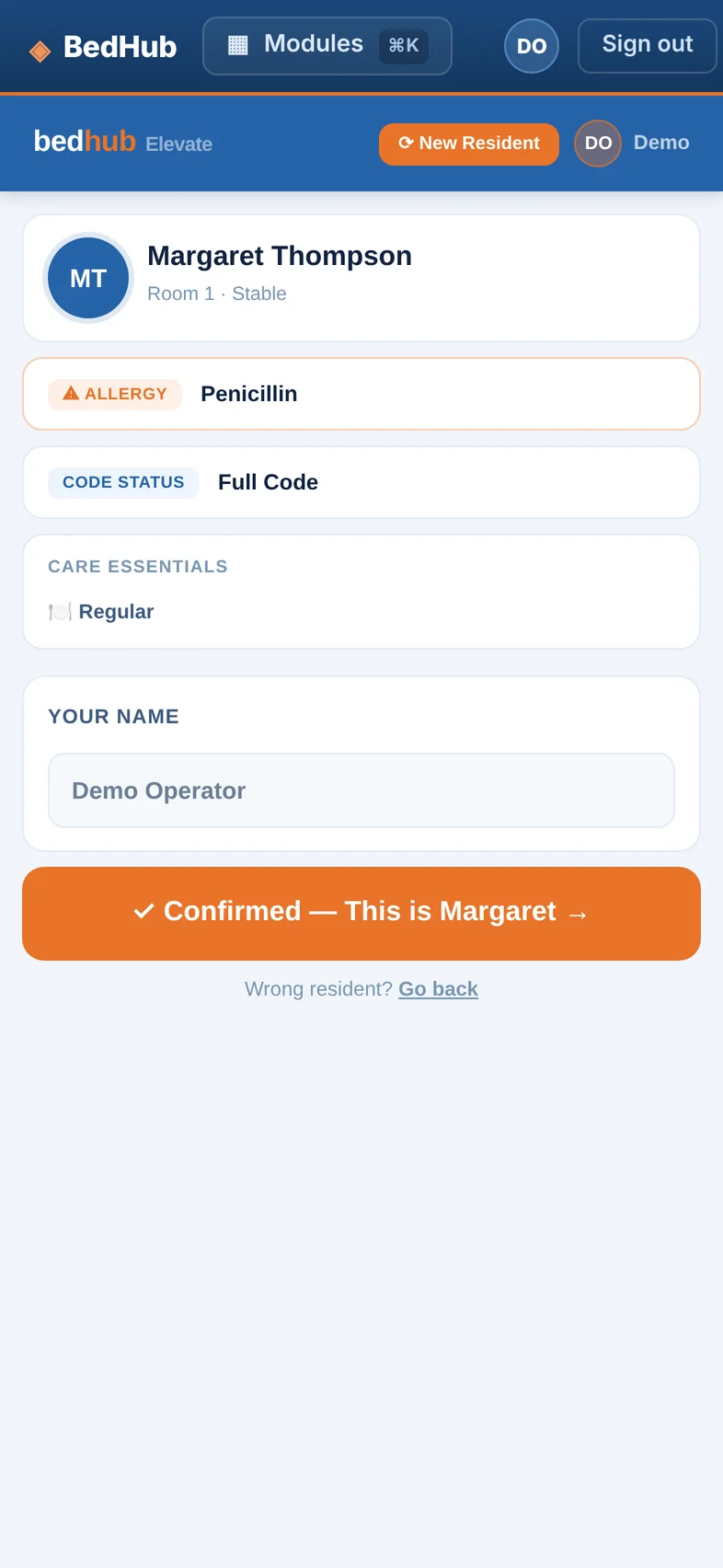
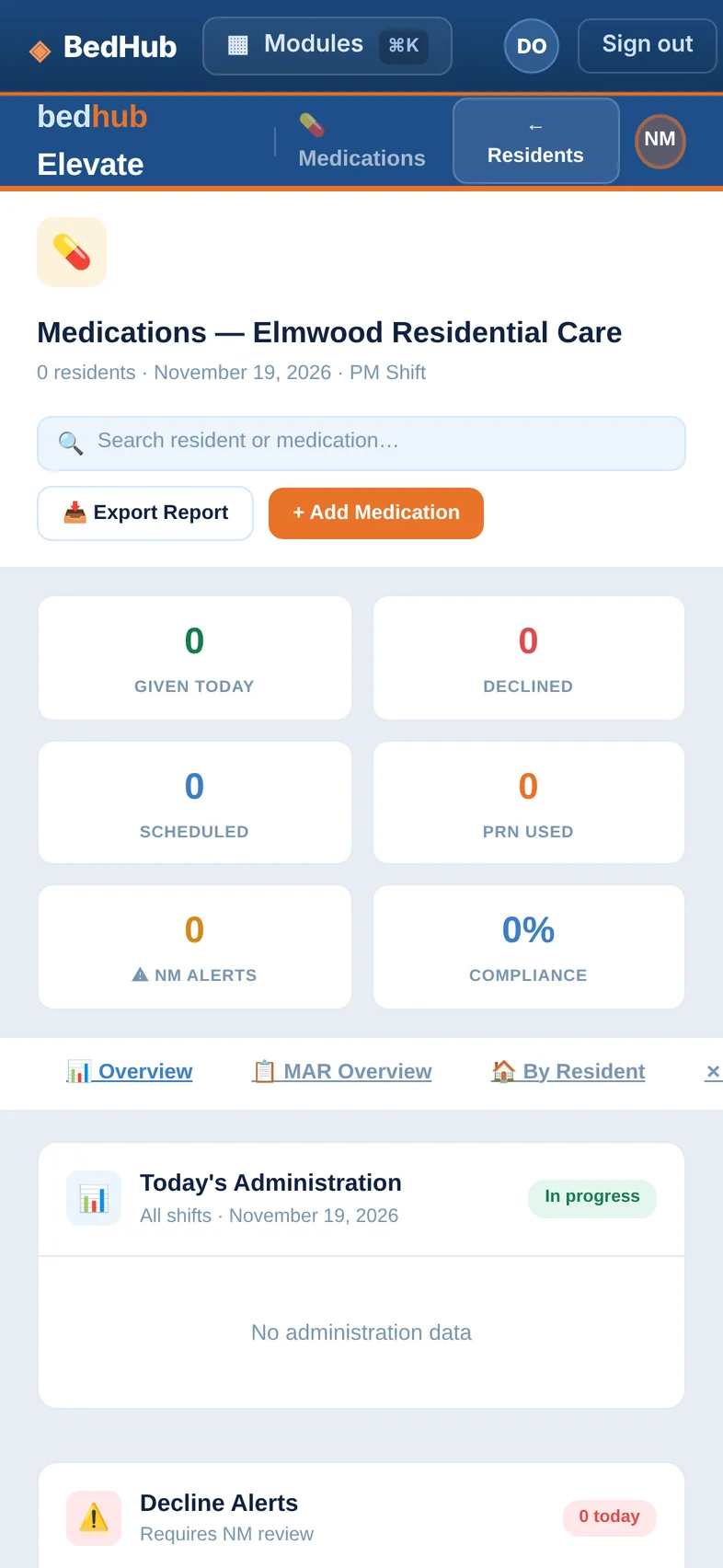
Care staff work on a phone, one-handed, mid-shift. Scan the resident's code, confirm the person, log the care.
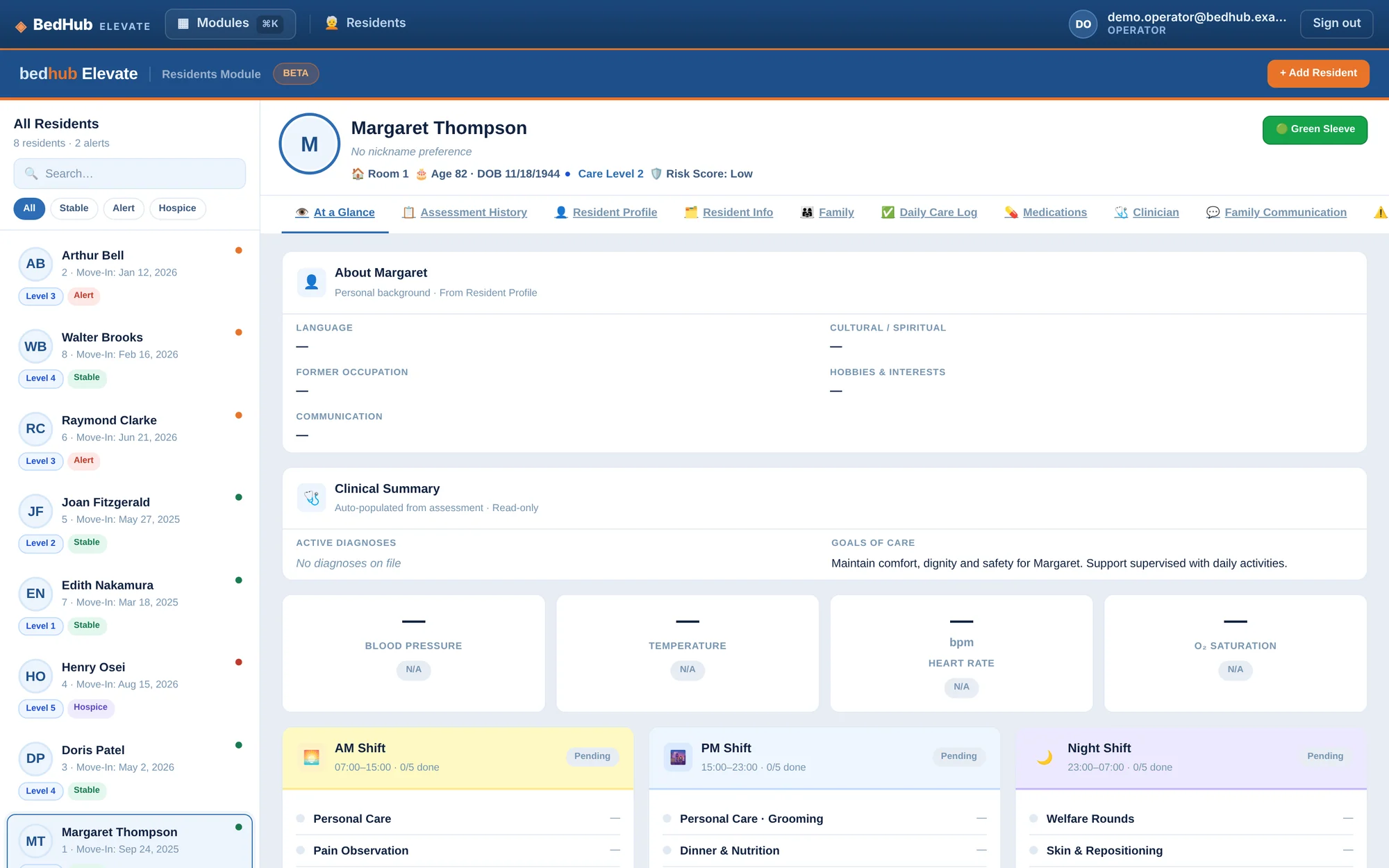
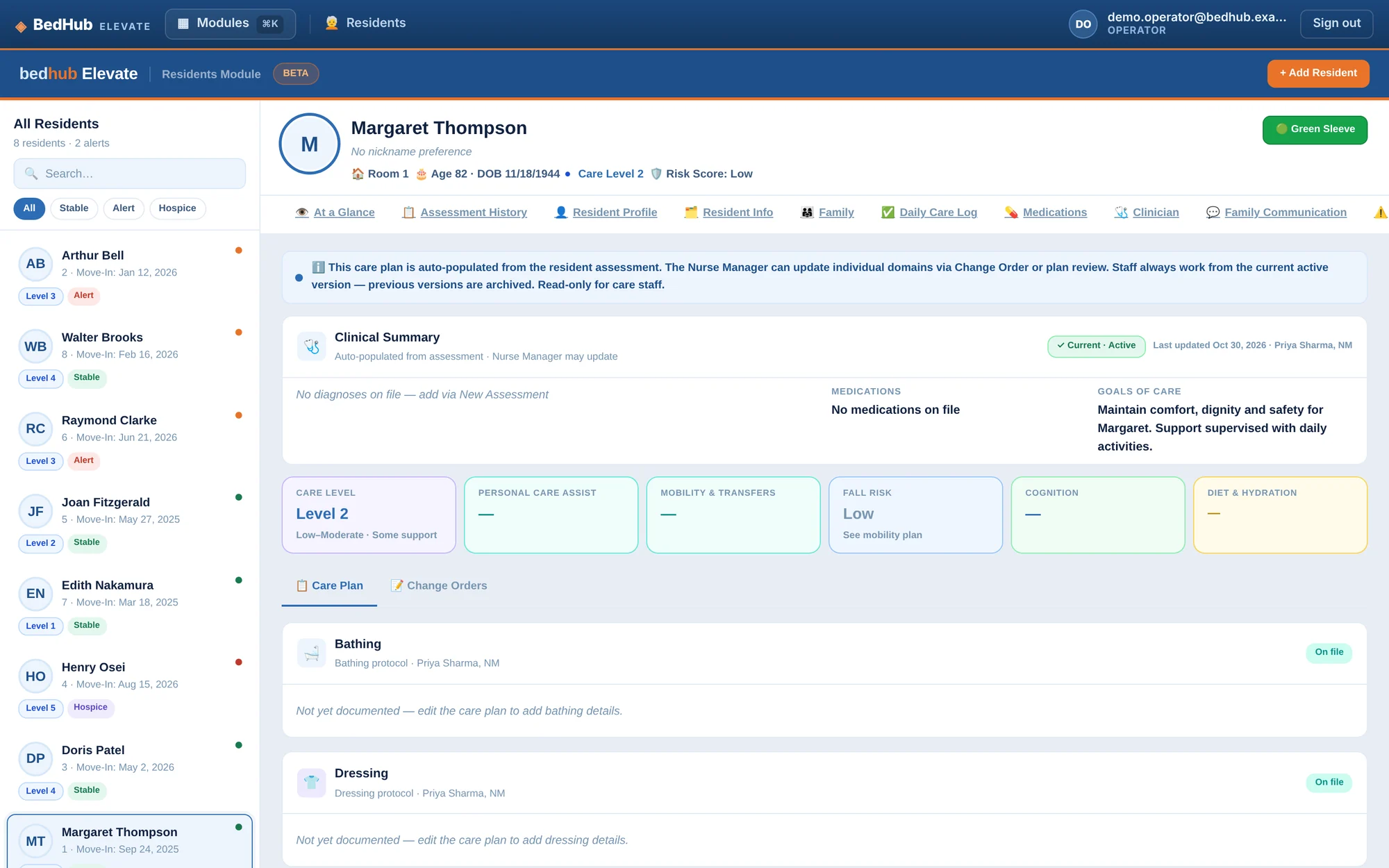
03 / One record per resident
Care plans are built from the admission assessment, so staff always work from the current version.
04 / Running the house
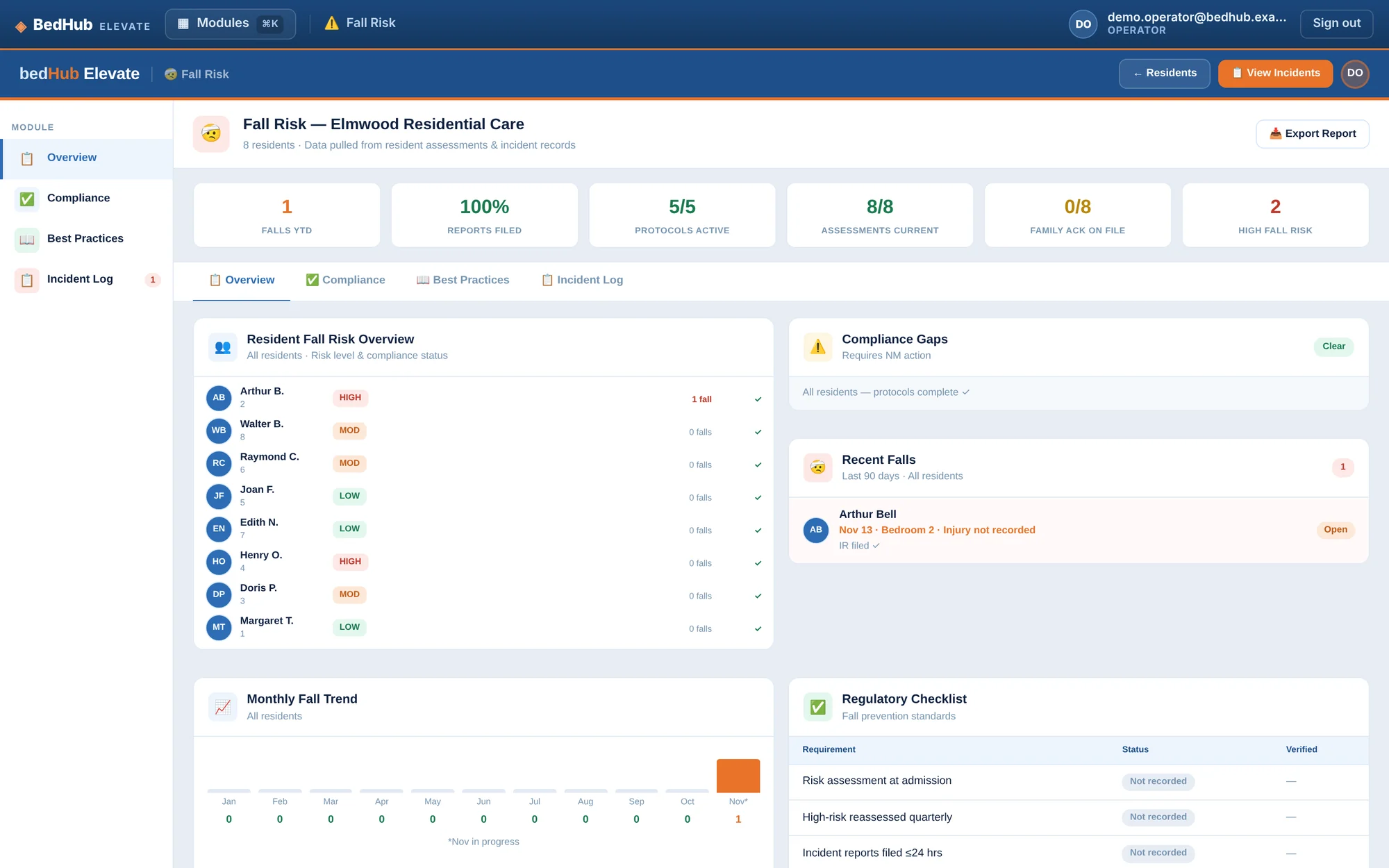
Menus, baths, cleaning, repairs, fire plans, schedules and HR. Each has its own module, and all of them read the same residents and staff.
01 / 10
05 / Under the hood
One React app with a shared shell and a module registry, so a new module plugs into navigation, roles and search in one place.
- Front endReact 19 and TypeScript, one app shell and module registry for 30+ modules.
- RolesRoute-level guards for operator, nurse manager, care staff and family.
- APIVercel serverless functions on MySQL 8, every query scoped to its care home.
- Data100 ordered migrations that build all 248 tables on an empty database.
- QualityAPI tests in Jest, interface tests with Testing Library.